
A gathering in Milan highlighted dialogue, youth participation and shared ethical principles through The Way to Happiness, the common-sense moral code written by Scientology founder L. Ron Hubbard.
Brussels, Brussels, Belgium, 11th Jun 2026 — The Church of Scientology in Milan recently hosted members of the Sri Lankan community for an intercultural event focused on dialogue, integration and the practical values contained in The Way to Happiness, the non-religious moral code written by L. Ron Hubbard.
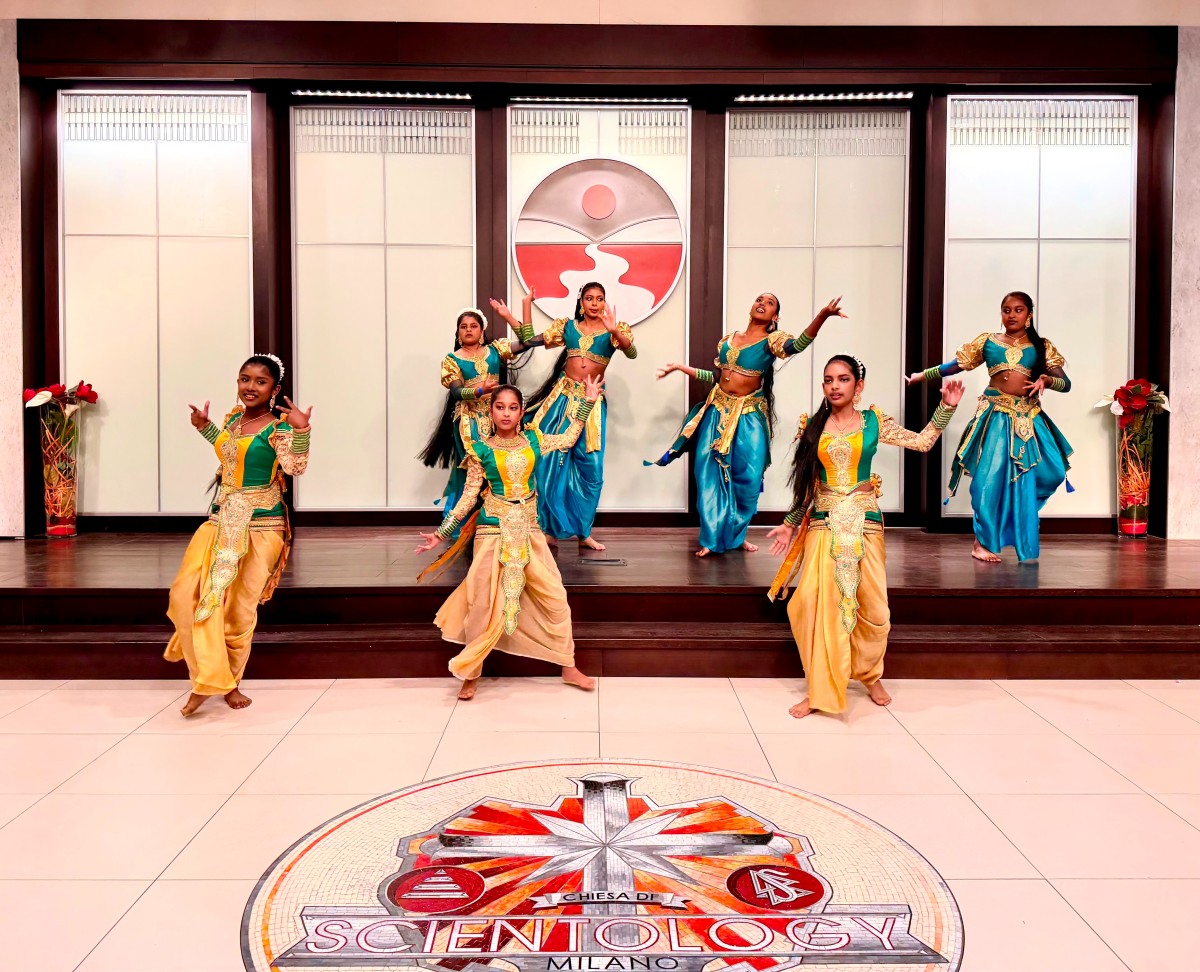
The meeting brought together community representatives, families, young people and volunteers for a day centred on peaceful coexistence, respect and shared responsibility. Organisers described the event as an opportunity to strengthen ties among communities living in Milan and to offer younger generations a simple framework for reflecting on personal conduct, everyday choices and mutual respect.
The participation of the Sri Lankan community gave the gathering a warm and family-oriented character. A central feature of the event was the presence of young people, whom community leaders encouraged to attend so they could become familiar with the 21 precepts of The Way to Happiness at an early age. Discussions focused on how values such as honesty, care for children, responsibility, trustworthiness and respect for the religious beliefs of others can contribute to social harmony in a multicultural city.
Milan, one of Europe’s major urban and economic centres, is home to communities from across Asia, Africa, Europe and Latin America. In that context, local initiatives that encourage dialogue and mutual understanding have particular relevance. The event offered a setting in which adults and young people could speak about integration not as an abstract policy concept, but as a daily practice shaped by ordinary decisions, respectful communication and the willingness to understand one another.
Representatives of the Sri Lankan community underlined the importance of giving young people stable reference points in a period marked by social pressure, digital distraction and uncertainty about the future. The booklet’s 21 principles were presented as a practical ethical compass that can help individuals make decisions grounded in respect for themselves and for others.
Among the precepts discussed were “Set a good example,” “Be worthy of trust,” “Fulfil your obligations,” “Respect the religious beliefs of others,” and “Try to treat others as you would want them to treat you.” Participants noted that these ideas are easily understood across cultural and religious backgrounds because they address basic standards of conduct needed in family life, school, work and community relations.
First published in 1981, The Way to Happiness is presented as a common-sense guide to better living, consisting of 21 basic principles applicable to people regardless of race, culture or creed. Its non-religious character has made it suitable for use in civic, educational and community settings, including interfaith and intercultural environments.
The text has been widely distributed internationally and has been recognised in connection with its broad translation record. Its central purpose is to encourage personal responsibility and social trust through simple principles that can be applied in daily life. For communities navigating cultural adaptation, generational differences and the challenges of urban life, participants at the Milan event saw the booklet as a useful basis for conversation.
The Church of Scientology’s connection to the initiative is both institutional and historical. While the booklet is non-religious in content, it was authored by L. Ron Hubbard and is widely supported by Scientology churches, missions and volunteers as part of their social betterment work. In Milan, the event provided a practical example of how such materials can be used to bring communities together around values that do not require theological agreement.
Ivan Arjona, the Church of Scientology’s representative to the European Union, the OSCE, the Council of Europe and the United Nations, said the Milan event reflected a form of civic cooperation that is especially relevant in today’s Europe.
“Europe’s strength is not only found in its institutions, but also in the daily efforts of families, communities and volunteers who build trust across cultures,” said Arjona. “When young people are introduced to principles such as respect, honesty, responsibility and care for others, they are better equipped to contribute to peaceful coexistence. Initiatives like this one in Milan show how shared values can become a bridge between communities while fully respecting religious and cultural diversity.”
The participation of young people was one of the most significant elements of the event. Organisers and community representatives emphasised that integration is most durable when it includes the next generation, helping young people feel both connected to their heritage and confident in their role as active members of the wider society in which they live.
For many families, the gathering also offered a moment of recognition: a space where cultural identity, community belonging and civic responsibility could be discussed together. Rather than presenting integration as the loss of one’s roots, the event framed it as a process of mutual respect, contribution and shared ethical understanding.
The Church of Scientology in Milan has hosted a range of community and social betterment activities over the years, including initiatives connected to drug prevention, volunteer service, interreligious dialogue and values education. The meeting with the Sri Lankan community added to this local pattern of opening spaces for dialogue with civil society groups and communities present in the city.
Participants left the event with a shared message: peaceful coexistence is strengthened not only through public institutions, but also through families, community leaders and young people who choose respect in ordinary life. In that sense, the Milan gathering served as a meaningful example of how universal values can help build understanding across different cultures.
The Church of Scientology, its churches, missions, groups and members are present across the European continent. Scientology Europe reports a continent-wide presence through more than 140 churches, missions and affiliated groups in at least 27 European nations, alongside thousands of community-based social betterment and reform initiatives focused on education, prevention and neighbourhood-level support, inspired by the work of Scientology founder L. Ron Hubbard.
Within Europe’s diverse national frameworks for religion, the Church’s recognitions continue to expand, with administrative and judicial authorities in Spain, Portugal, Sweden, the Netherlands, Italy, Germany Slovakia and others, as well as the European Court of Human Rights, having addressed and acknowledged Scientology communities as protected by the national and international provisions of Freedom of Religion or belief.
Media Contact
Organization: European Office Church of Scientology for Public Affairs and Human Rights
Contact Person: Ivan Arjona
Website: https://www.scientologyeurope.org
Email: Send Email
Address:Boulevard de Waterloo 103
City: Brussels
State: Brussels
Country:Belgium
Release id:45986
The post Sri Lankan Community Joins Intercultural Values Event at Church of Scientology in Milan appeared first on King Newswire. This content is provided by a third-party source.. King Newswire makes no warranties or representations in connection with it. King Newswire is a press release distribution agency and does not endorse or verify the claims made in this release. If you have any complaints or copyright concerns related to this article, please contact the company listed in the ‘Media Contact’ section
Disclaimer: The views, suggestions, and opinions expressed here are the sole responsibility of the experts. No Urban Flash News journalist was involved in the writing and production of this article.